
Lighting for seniors is one of the most important considerations in reducing fall risk. There are several different types of lights that can help reduce fall risk: Nightlights, motion sensor lights, flush ceiling lights, and toe-kick lights. Each are important considerations as they create equal non abrasive sources of light. And each has their own advantage to them
Lighting placement is the first major consideration that should be made when finding the appropriate lighting solution for a senior. Different lights should be placed in different orientations to maximize safety and comfort allowing for a gentle but still helpful light. Gentle light is especially important due to the common disability glare or “dazzle” which is the common effect bright lights have on seniors in which interaction with a bright light causes an obscuring of other objects.
Nightlights should be placed in several places around the home including between the bathroom and bedroom, in the bathroom around the toilet and sink, and at the very top and bottom of staircases.
Motion Sensor Lights are also a key source of light and fall prevention. The most important place that they should be is in stairways, but they should also be in garages, pantries, and bathrooms
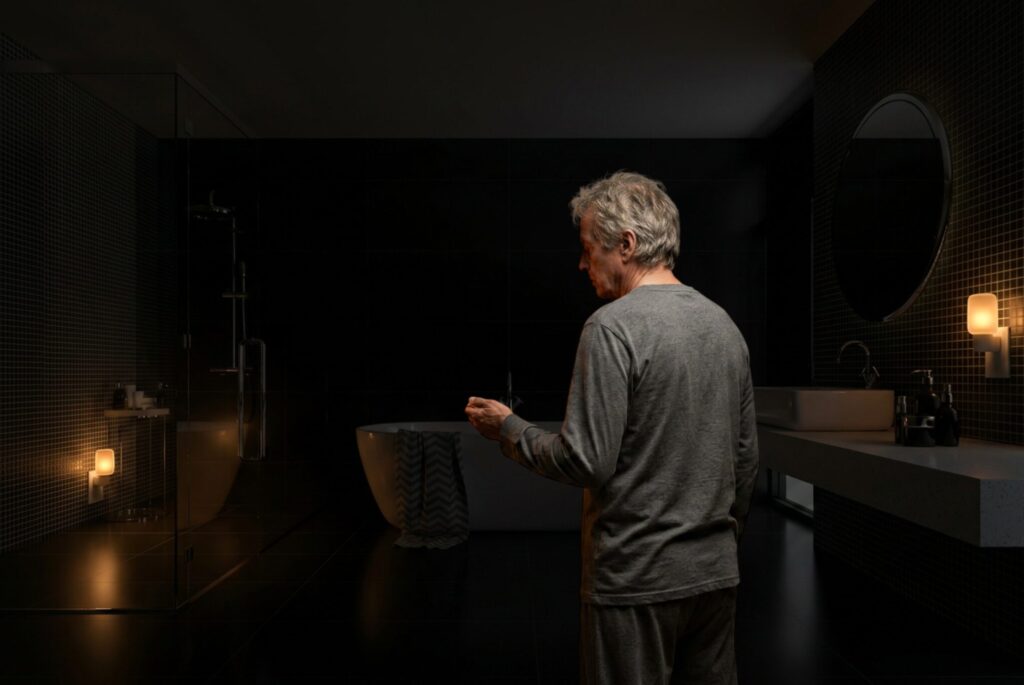
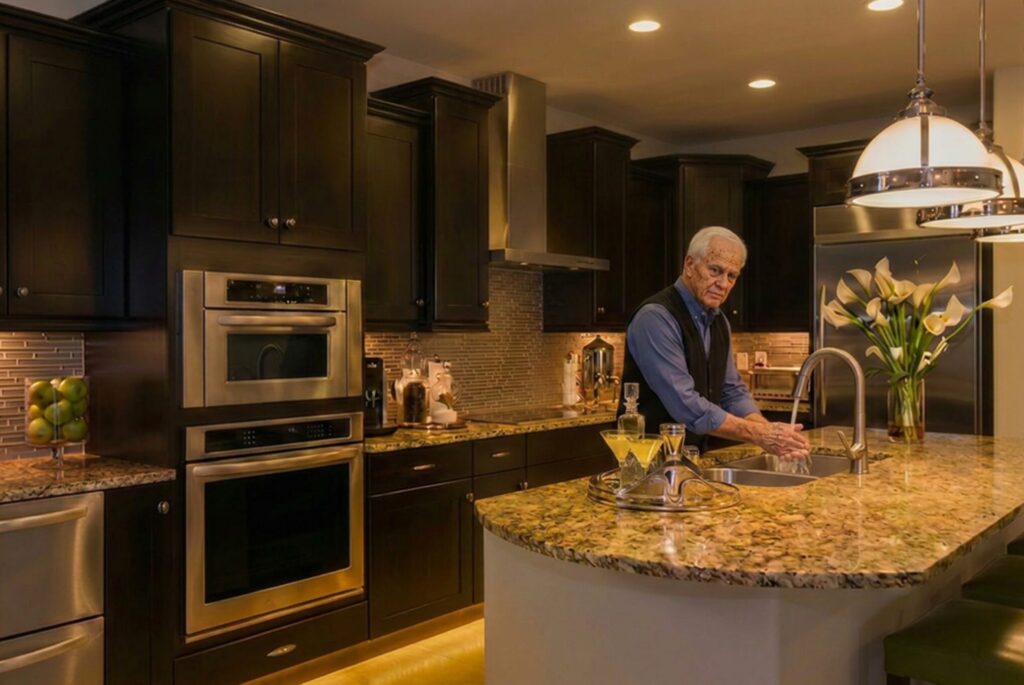
Flush Ceiling Lights are a useful source of all encompassing light that creates a comfortable ambience without creating harsh shadows. The best placement for these is in living rooms/bedrooms, hallways, and kitchens to maximize their light output without being too abrasive.
Toe-Kick Lights are a useful dim light that allows for seniors to navigate safely while also mitigating glare. They should often be placed under beds, bathroom vanities, kitchen cabinets, and individual stairs.
Frequently Asked Questions:
How does lighting help with dementia?: Good lighting helps keep the body’s natural sleep cycle on track, which can ease late-day confusion (often called “sundowning”). It also gets rid of harsh shadows that can look like scary obstacles or holes, helping to reduce anxiety and keep the home feeling safe.
How can motion-activated lights improve safety?: They take away the guesswork of wandering around in the dark to find a switch. Because they turn on automatically as soon as someone approaches, they make late-night bathroom trips and dark stairways much safer, especially for anyone using a cane or walker.
What is layered lighting?: Instead of relying on one glaring overhead bulb, layered lighting mixes different types of light—like a soft ceiling light paired with a good reading lamp and floor-level nightlights. This makes it easy to adjust the room to be perfectly comfortable for any activity without hurting sensitive eyes.
How Could I Choose Lighting that helps prevent fall risk? Blog Post Here