
As seniors age another major consideration to minimizing fall risk should be preparing safer showers and tubs for them. There are several different ways to make showers and tubs safer for seniors each with their own benefits. These changes can include a shower chair or bench, detachable shower head, walk in tubs, curbless showers, and adding doors. Each of these changes has value and allows for a safer bathroom and the decision should be based on the immediate needs of the senior.
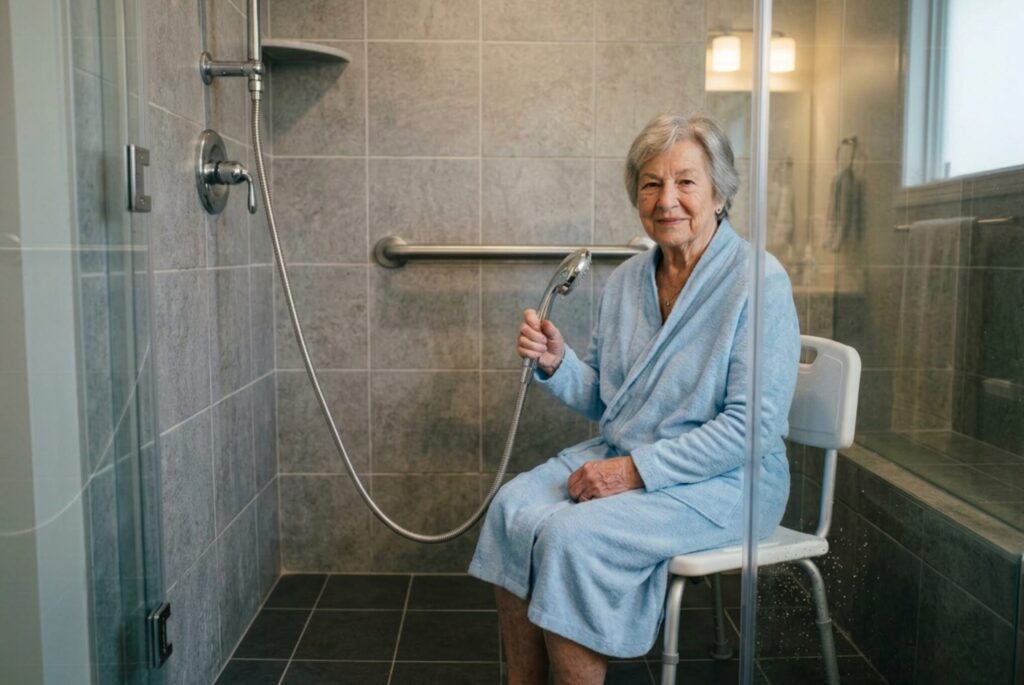
Shower Benches are Chairs: Shower chairs are a fantastic, cost-effective way to immediately upgrade bathroom safety for seniors. They provide a sturdy place to rest, which takes the physical strain out of washing and drastically cuts down the risk of slips and falls without requiring an expensive bathroom remodel. However, they aren’t a one-size-fits-all solution. In smaller tubs or narrow shower stalls, a bulky chair can clutter the space and actually become a tripping hazard or make it hard to maneuver. Plus, for seniors with more severe mobility limitations, a standard temporary chair might not offer enough structural support compared to a secure, built-in transfer bench or a walk-in tub.
Detachable Shower Heads: Detachable shower heads are an incredibly affordable and easy-to-install upgrade that pairs perfectly with shower chairs. They bring the water directly to the user, minimizing dangerous reaching and bending while making seated bathing much more comfortable. However, they aren’t without drawbacks; a long, dangling hose can become a tripping hazard or get caught on fixtures, and seniors with severe arthritis or weak grip strength might find it painful to hold the heavy wand or operate the water-pause buttons for extended periods.
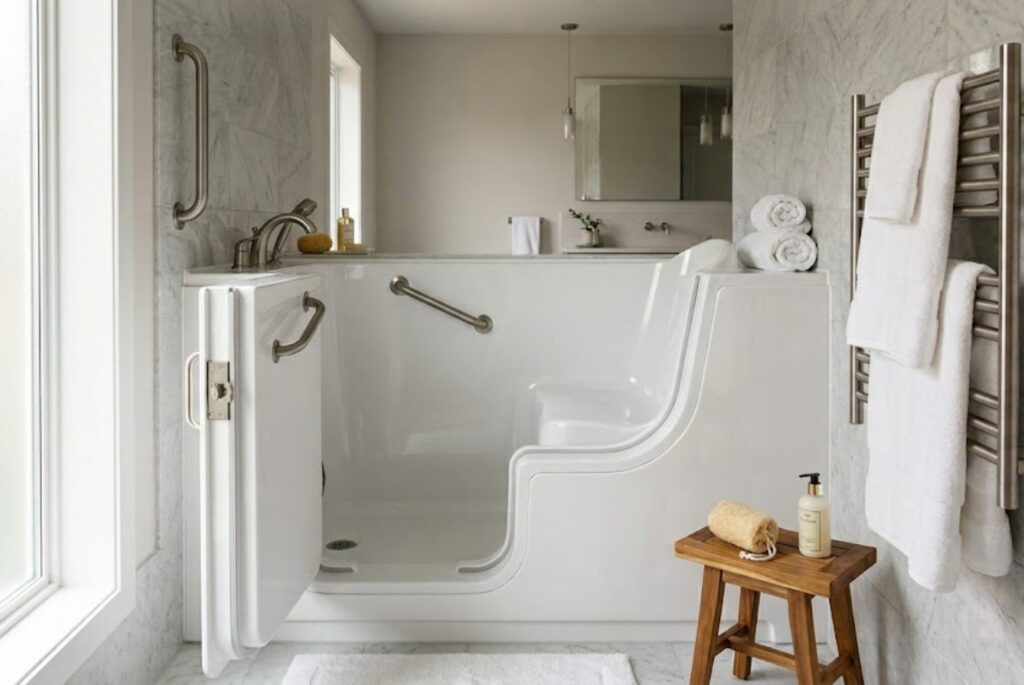
Walk in Tubs: Walk-in tubs offer a secure, therapeutic bathing experience with a low-entry door that removes the need to step over a tall, hazardous tub wall. While they provide excellent built-in seating and safety features, they come with a hefty price tag and require professional plumbing installation. The biggest downside, however, is the temperature and timing: the user must sit inside the empty tub while it fills up, and wait for it to drain completely before opening the door to get out, which can leave them shivering and uncomfortable during the process.
Curbless Showers: Curbless showers are the ultimate gold standard for safety and comfort, featuring a completely flat floor transition that seamlessly accommodates walkers and wheelchairs. This zero-barrier design entirely removes the bathroom’s most common tripping hazard while giving the space a beautiful, modern look. While it does require an upfront investment to properly re-slope the floor, many families find it highly worthwhile because it secures long-term independence and can even boost the home’s overall resale value. The main caveat to keep in mind is the need for an experienced contractor, as the drainage must be expertly designed to ensure water stays in the shower and doesn’t drift out onto the bathroom floor.
Adding Doors to the Shower: Adding a watertight door insert to an existing bathtub, often called a tub cut-out, is a clever, mid-priced solution that lowers the step-in height without the massive cost of ripping out the old tub. It greatly reduces fall risks for those who struggle to lift their legs while still preserving the option to take a bath. However, it might not be the best choice permanently, as the aftermarket door seals can degrade and leak over time, and the modified opening may still be too narrow if a senior eventually requires a wheelchair or heavy caregiver assistance to bathe.
Frequently Asked Questions:
What is a curbless or zero-threshold shower?: A curbless shower has a completely flat floor with no step or lip to cross when entering. This zero-barrier design eliminates a major tripping hazard and makes the shower fully accessible for wheelchairs and walkers.
Do I need a shower seat or bench?: A shower seat or bench is highly recommended for seniors, as it reduces the physical strain of standing and minimizes the risk of slipping. They are especially helpful for those with poor balance, low stamina, or arthritis, making bathing a much safer and less exhausting experience.
Are walk-in tubs a good option for seniors?: Walk-in tubs can be a great option because they feature a low-entry door and built-in seating, drastically reducing the risk of falls associated with stepping over a traditional tub wall. However, users must wait inside while the tub fills and drains, which can cause them to become cold, and they are a significant financial investment.
What temperature controls prevent scalding?: Anti-scald valves, also known as thermostatic mixing valves, are essential devices that automatically mix hot and cold water to ensure the shower or sink never exceeds a safe temperature, usually around 120°F. These protect seniors who might have slower reaction times or reduced skin sensitivity to heat.
How wide should a bathroom doorway be?: A bathroom doorway should ideally be at least 32 to 36 inches wide to comfortably accommodate a walker or a wheelchair. If widening the doorframe entirely isn’t feasible, installing swing-clear offset hinges can often add a crucial couple of inches of clearance without major construction.
How much does an aging-in-place bathroom remodel cost?: Costs vary wildly depending on the scope of the project, ranging from a few hundred dollars for simple DIY additions like grab bars and improved lighting to $15,000 or more for a full remodel featuring a curbless shower and widened doorways. It is often best to prioritize high-impact, lower-cost safety items first if budget is a concern.
How do I make a bathroom safer for someone with dementia?: Keep the space brightly and evenly lit to reduce confusing shadows, and remove clutter, loose rugs, or mirrors that might cause distress or illusions. Using high-contrast colors, such as a dark toilet seat on a white toilet, or bright towels against a light wall, can also help them distinguish objects and navigate the room more easily.
Are there exercises to improve bathroom balance?: Yes, physical therapy exercises that strengthen the core and lower body, such as sit-to-stand movements from a sturdy chair and gentle leg lifts, can significantly improve balance and make bathroom transfers safer. It is always best to consult a doctor or physical therapist to get a routine tailored to the individual’s specific mobility levels.
What is the best handheld showerhead for seniors?: The best handheld showerheads are lightweight, feature a long, flexible hose, and have an easy-to-use water pause button right on the handle so the user doesn’t have to reach for the wall controls. Models with large, easy-to-press buttons or levers are highly recommended for those with arthritic hands or reduced grip strength.
What is the best bathroom layout for mobility aids?: An open floor plan with a five-foot turning radius is the gold standard, as it allows someone in a wheelchair or using a walker to comfortably and safely turn around completely. Removing tight galley layouts and ensuring clear, uncluttered paths from the door to the toilet and shower are critical for maneuverability.
What bathroom changes help with poor balance or mobility?: Installing securely anchored grab bars near the toilet and inside the shower is one of the most effective changes you can make. Pairing these with a higher, comfort-height toilet, non-slip flooring treatments, and a shower seat creates a secure environment that physically supports the user.
What lighting is best for a senior bathroom?: Layered lighting works best, combining bright, even overhead flush ceiling lights to eliminate shadows with motion-sensor or toe-kick lights near the floor for safe nighttime navigation. Using cool-toned bulbs around the vanity also increases visual contrast, making grooming and medication management much easier on aging eyes.